
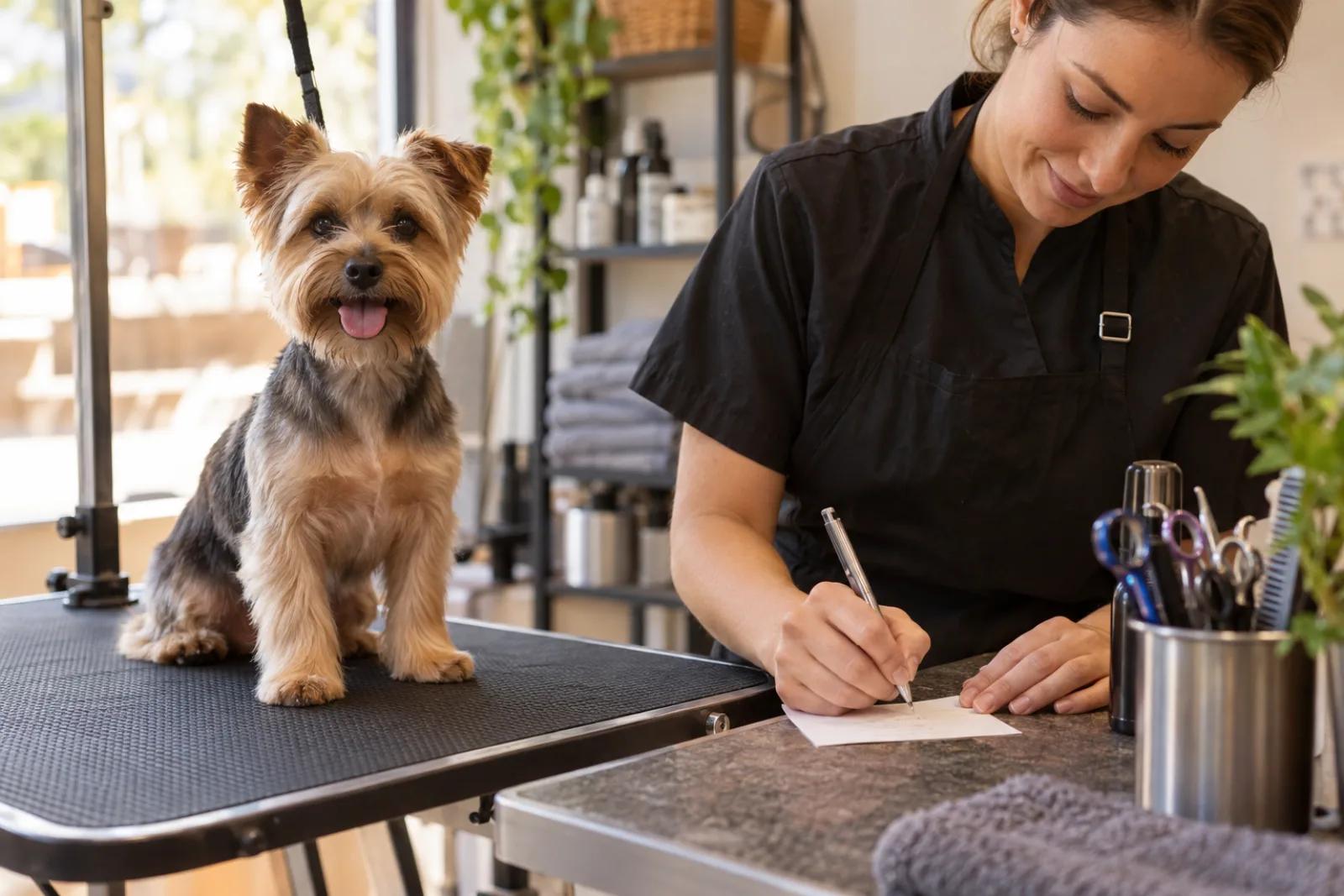
Quick answer: A dog grooming record card documents the pet, date, service performed, cut recipe, products, coat and handling observations, actual duration, price, owner feedback, and recommended return interval. It is a visit-level record: intake collects starting information, and the booking reserves time. Blismo provides a connected pet, appointment, payment, communication, and rebooking workflow; verify the exact note and photo fields in the configured account.
Why Grooming Record Cards Still Matter
When an owner asks for the same cut as last time, the answer should not depend on one employee’s memory. The record should explain what was requested, what was completed, what helped the pet stay comfortable, and what to change next time.
Paper cards can preserve the recipe, but they are hard to connect to the calendar, customer conversation, checkout, and next appointment. A digital record is useful when staff can find it at the moment they need it.
What to Track After Every Appointment
- Identity and visit: pet name, owner, date, groomer, scheduled service, completed service, and actual duration.
- Cut recipe: blade or guard, body length, face, feet, tail, and sanitary trim.
- Coat and products: objective condition, shampoo or treatment, add-ons, and any sensitivity the owner reported.
- Handling: observed response to drying, nail work, breaks, and techniques that helped.
- Outcome: owner feedback, final price, requested change for next time, and recommended return interval.
Photos may help preserve style references when the owner permits them and the shop has an appropriate storage and consent process.
A Simple Dog Grooming Notes Template
Pet and date: [name, date, groomer]
Service and time: [completed work, actual duration]
Cut recipe: [blade or guard, face, legs, feet, tail]
Coat and products: [objective note, products, add-ons]
Handling: [what happened and what helped]
Owner feedback: [what to repeat or change]
Next visit: [recommended interval]
Final price: [amount]
Keep the note short enough to finish after every visit. “Needed two short breaks during drying” is more useful than an emotional label. Groomers should record observations without making veterinary diagnoses.
The Handoff Problem a Record Card Solves
Suppose Max’s last groom required a longer drying break, and the owner asked for shorter ears next time. Six weeks later, another groomer performs the service. Without a usable record, that employee must rely on memory, ask the owner to repeat everything, or guess. A short, factual visit note lets the second groomer confirm the history and prepare a similar experience.
It also affects the calendar. If Max consistently needs extra handling time, future appointments should account for it. The note should describe what happened and what helped, not label the pet in a way that gives the next team member no practical direction.
Weak note: “Bad dog. Impossible for nails.”
Useful note: “Pulled paws away during nail handling; completed front nails after a short break. Confirm the owner’s preference and reserve extra handling time next visit.”
A Five-Minute End-of-Visit Routine
- Confirm the pet, groomer, and service completed.
- Save the cut recipe and products actually used.
- Write brief, objective coat and handling observations.
- Note the owner’s requested adjustment for next time.
- Record actual duration and final price.
- Recommend a realistic return interval.
- Book the next appointment or use an approved follow-up workflow.
- Save any photos only with the appropriate permission.
This routine should be short enough to happen on a busy day. An elaborate template that nobody completes is less useful than a consistent set of practical details.
Use History to Improve the Next Visit
Compare scheduled and actual duration to find services that routinely run long. Review add-on frequency to see which upgrades are actually chosen. Look at repeat adjustment requests to find weak consultations or unclear style descriptions. Compare the recommended return interval with the client’s actual rebooking pattern.
Blismo can connect the identified pet to booking, communication, payment, and rebooking. Confirm which pet-specific note, photo, document, and alert fields are enabled before promising that the complete record card lives inside the product. The shop can still use a consistent record-card process alongside the connected appointment workflow.
Intake Form, Booking, and Record Card
The intake form captures owner-provided background before the first visit. The appointment record identifies the pet, staff member, service, time, and status. The record card documents the work and observations during or after each visit. Connect all three so staff do not copy the same facts repeatedly.
Review scheduled versus actual duration, repeated owner adjustment requests, add-ons, and return intervals to improve future appointments. The scheduling guide explains how that history can improve time estimates.
Frequently Asked Questions
What is a dog grooming record card?
It is a visit-level record of the completed service, cut recipe, products, objective observations, owner preferences, duration, price, and next-visit recommendation.
Is a grooming record card the same as an intake form?
No. Intake captures background before the first visit. The record card captures what happened during and after a service.
Should a grooming record include photos?
Photos can help with style references when the owner permits them and the shop uses secure storage and clear rules for internal versus marketing use.
What pet details does Blismo collect?
Blismo’s confirmed booking fields are animal name, sex, birthday, weight, and type or breed. Verify additional notes, image, or document fields for the configured account.