
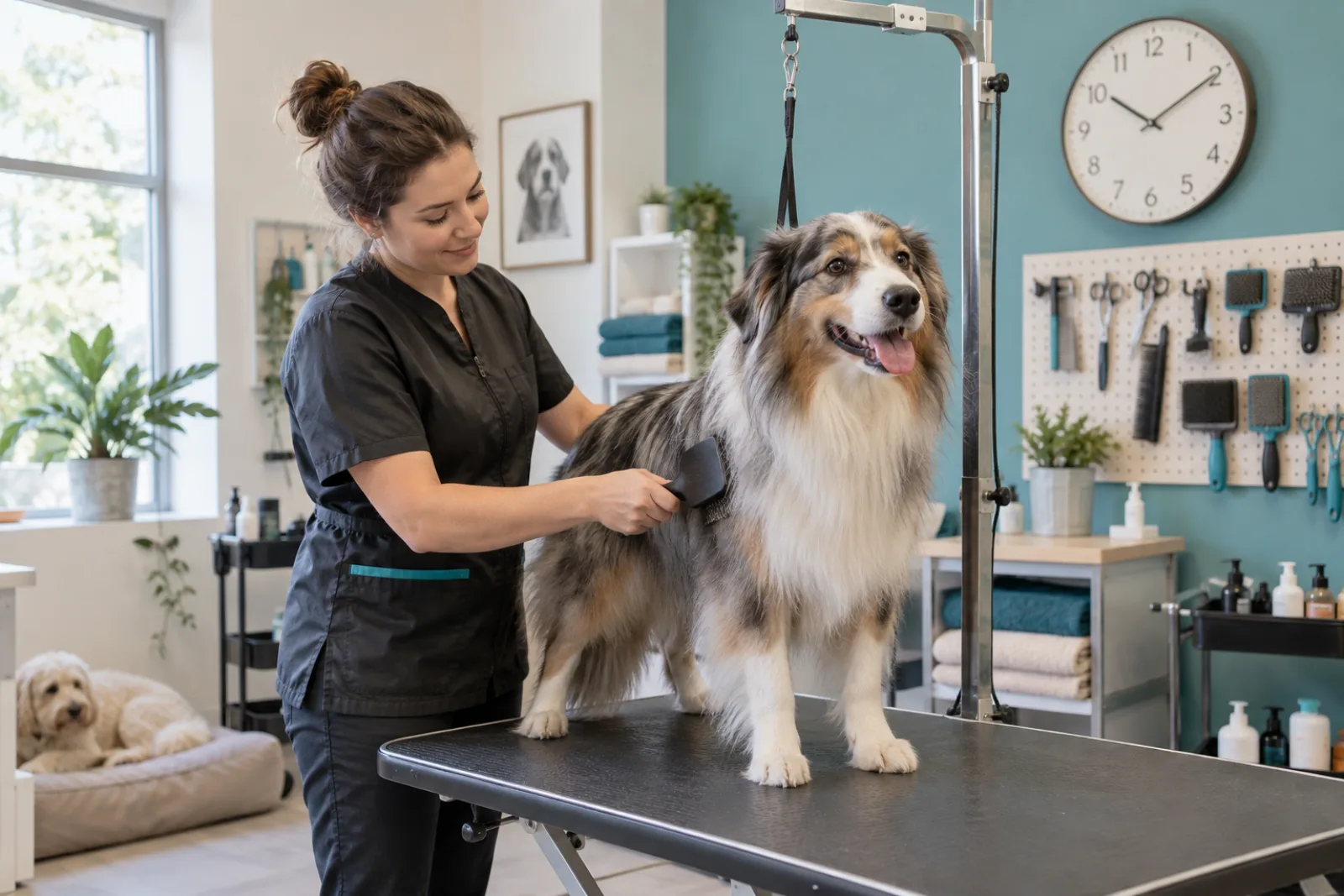
Quick answer: Dog grooming commonly takes around 90 minutes to four hours, but that range is only a planning starting point. Service, size, coat, drying, behavior, mobility, and shop workflow can move the estimate. Collect pet details before booking, confirm condition at check-in, add a buffer, and compare scheduled with actual time after each visit. Blismo connects core pet booking details and appointment history; confirm any automatic duration calculation before claiming it.
Six Variables That Change Grooming Time
- Breed or type: a clue about likely coat and grooming pattern, never a complete time rule.
- Weight and size: influences bathing, drying, lifting, and table space.
- Coat type and condition: dense undercoat, tangles, matting, and long finishes require different labor.
- Service: bath, tidy, full groom, de-shed, nails, and add-ons need different blocks.
- Behavior and mobility: introductions, breaks, and comfortable handling may need more time.
- Shop workflow: staffing, dryer capacity, cleanup, and handoffs affect completion.
Illustrative Time Ranges
Use these ranges to start a local scheduling review, not as a promise to a customer:
- Small short-coated dog, bath and nails: 60–120 minutes.
- Small or medium dog, tidy-up: 90–150 minutes.
- Small or medium dog, full groom: 120–210 minutes.
- Large dog, bath and de-shed: 150–240 minutes.
- Large coated dog, full groom: 180–300 minutes or more.
Replace these examples with the shop’s measured averages. Mobile grooming, equipment, staffing, and handling policy can change the numbers substantially.
Break the Appointment Into Four Stages
1. Intake and preparation
Confirm the requested cut, inspect the coat, ask what changed since the last visit, and agree on any service adjustment. First visits normally need more consultation because the history is untested.
2. Bathing and drying
Drying is often the hidden variable. Coat density, pet comfort, equipment, weather, and the dryer queue all affect the finish time. Several dense-coated pets arriving together can delay an otherwise accurate service estimate.
3. Clipping and finishing
A maintenance trim and a shaped finish should not share the same default block. Include nails, ears, paw care, hand finishing, and other add-ons in the plan.
4. Checkout and handoff
Final inspection, owner communication, payment, notes, cleaning, and rebooking happen after the clippers stop. If the calendar ignores this work, it will consume the next pet’s appointment.
Build a Practical Duration Formula
Appointment block = base service time + pet adjustment + coat adjustment + handling adjustment + buffer. If a shop measures 120 minutes for a medium full groom, adds 25 minutes for a dense coat, 15 for first-visit intake, and a 15-minute buffer, it should reserve 175 minutes. The estimate remains subject to the groomer’s check-in assessment.
Do not omit checkout, notes, cleaning, owner communication, or rebooking from the working day. Five visits that each overrun by 15 minutes leave the final appointment 75 minutes behind.
Use Connected History Without Overpromising Automation
Blismo’s confirmed pet booking flow includes animal name, sex, birthday, weight, and type or breed. These are better clues than an owner name and a generic “grooming” request. Staff can flag a booking that needs a coat or service clarification before the day fills up.
Coco can help handle phone inquiries while the groomer works, and Alice can help with customer messages. After the visit, the business should record what changed the estimate: coat condition, actual service, drying difficulty, handling breaks, and completion time. Confirm which notes and custom fields are available in the shop’s setup.
Smart Rebooking addresses a different calendar problem: an owner leaving without the next visit planned. A sensible maintenance interval can make future appointments easier to estimate, although coat condition and home care still vary. None of these workflows should be described as an automatic time calculator without feature verification.
Build Your Own Grooming-Time Matrix
- List the shop’s most common services and meaningful add-ons.
- Define size or weight bands staff can apply consistently.
- Track actual visit length for four to eight weeks.
- Review median time and common exceptions for each service.
- Add clear coat and handling adjustments and a buffer.
- Review the matrix when staffing, equipment, or service design changes.
Save the actual duration and what changed it in a grooming record card. The pricing guide explains how time affects a fair service menu.
What to Tell Customers
Give a range that reflects the information you have: “Appointments like this usually take about two to three hours. We will confirm the timing after checking the coat and contact you when your dog is close to ready.” Ask new clients for weight, breed or type, age, coat condition, and requested service. If the pet needs special handling, let the groomer assess the work before promising a completion window.
Blismo can keep the owner, pet, booking, calls, and messages connected. It should not be described as automatically calculating grooming duration unless that capability has been confirmed for the shop’s configuration.
Frequently Asked Questions
How long does a full dog groom take?
Many full grooms take roughly two to four hours, but size, coat, service detail, drying, behavior, and shop workflow can make an individual appointment shorter or longer.
Does breed determine grooming time?
Breed is a useful clue, but weight, coat condition, selected service, and handling needs also affect the actual time.
Should groomers promise an exact pickup time?
Give a realistic range and update the owner after check-in or when the pet is close to ready.
Does Blismo automatically calculate grooming duration?
Do not assume that feature is available. Confirm the exact duration rules enabled for the account; Blismo’s confirmed pet fields help staff begin with better information.