
About Alice
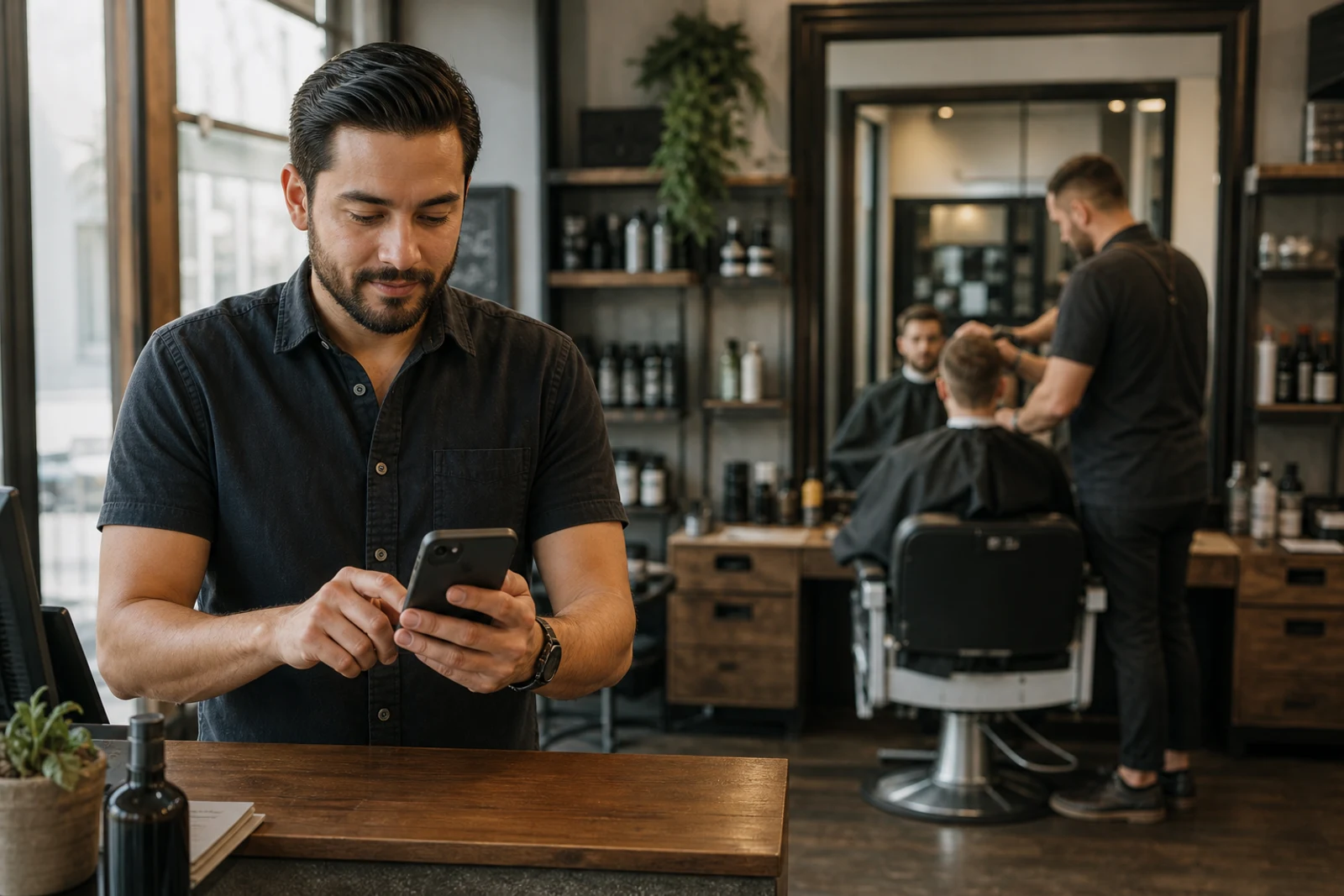
Alice is Blismo's AI customer service assistant for barbershops and salons. She reads and replies to incoming client messages the way a well-briefed front-desk person would — answering questions from your real service menu, checking live availability, and booking, rescheduling, or cancelling inside the conversation. The difference from a standard texting tool is that she doesn't just deliver messages to a queue; she resolves them.
One-Way vs. Two-Way Texting
Most barbershops already send texts. Far fewer can receive them usefully.
| One-Way (Blast/Reminder) | Two-Way Texting | Two-Way + AI (Alice) | |
|---|---|---|---|
| Sends confirmations and reminders | Yes | Yes | Yes |
| Client can reply | No — or replies vanish | Yes | Yes |
| Someone reads the reply | — | A staff member, eventually | Immediately |
| Reply during peak hours | — | Usually delayed | Immediate |
| Reply after closing | — | Next morning | Immediate |
| Can complete a booking from the thread | No | Yes, if staff are free | Yes, automatically |
| Staff time required | None | Significant | Minimal |
The middle column is where most shops that "have texting" actually sit — and it's a real improvement over blasts. The limitation is that two-way texting creates an inbox, and an inbox needs somebody watching it.
Why Texting Beats the Alternatives for a Barbershop
- SMS open rates run near 98%, against roughly 20% for email — a gap large enough to make email a secondary channel for anything time-sensitive.
- 77% of clients prefer calling or texting to handle appointment changes rather than navigating an app (BookingBee, 2026).
- Texting doesn't require the client to be free to talk. They can reply from work, from a meeting, from the train.
- It doesn't require you to be free either — which matters when barbershops miss an estimated 22–27% of calls simply because everyone's hands are busy (BookingBee, 2026).
That last point is the reason texting and phone answering solve different halves of the same problem. A call demands simultaneous availability from both sides. A text doesn't.
The Problem With Two-Way Texting Nobody Mentions
Adding two-way texting to a barbershop creates a new obligation: someone now has to answer texts.
In practice that means:
- During peak hours, nobody is watching the inbox — the same reason the phone goes unanswered.
- After closing, messages sit until morning, by which point the client has often booked elsewhere.
- On a busy Saturday, a backlog builds and gets triaged badly.
- The replies get short, because they're written between clients — which is fine for "yes, 3pm works" and poor for a new client asking about pricing.
The tool solved the channel. It didn't solve the staffing.
What Alice Actually Does With an Incoming Text
- Reads and understands the request — new booking, reschedule, cancellation, price question, or a request for a specific barber.
- Checks live availability rather than promising to look it up.
- Replies immediately, at any hour, in conversational language rather than a canned auto-response.
- Completes the action in the thread — the appointment is booked, moved, or cancelled without a handoff.
- Escalates what it shouldn't handle — complaints and unusual situations route to a person rather than getting an improvised answer.
Where This Changes the Outcome
| Scenario | Two-Way Texting Alone | With Alice |
|---|---|---|
| "Do you have anything Thursday evening?" at 9pm | Answered next morning; client may have booked elsewhere | Answered and booked that evening |
| "How much for a fade and beard?" mid-Saturday | Sits until someone is free | Answered from your service menu immediately |
| "Can I move my 2pm to next week?" | Requires a staff member with calendar access | Rescheduled in the thread |
| Five messages arrive during a rush | Triaged late, some missed | All handled |
| A complaint arrives | Handled by whoever sees it | Escalated to a person |
What Two-Way Texting Doesn't Fix
Being straight about the boundaries, because texting gets oversold:
- It doesn't replace the phone. A large share of barbershop clients still call, and calls carry high intent. Texting is a parallel channel, not a substitute.
- It doesn't help if your service and pricing information is wrong or missing. Any assistant — human or AI — answers from what it's been given.
- It isn't a marketing channel. Two-way texting works because it's a service conversation the client started. Using the same thread for promotional blasts erodes exactly the responsiveness that makes it work.
What Clients Actually Text a Barbershop
If you're configuring this, it helps to know where the volume goes. In practice, inbound texts to a barbershop cluster into a short list:
- "Do you have anything on [day]?" — availability, usually for the next 48 hours.
- "How much for [service]?" — pricing, often combining two services.
- "Can I move my appointment?" — reschedules, the single most time-consuming request to handle manually.
- "Is [barber] in on Saturday?" — staff-specific availability.
- "Do you take walk-ins?" — policy questions from new clients.
- "Do you do [service]?" — scope questions, particularly beard work, colour, and kids' cuts.
Almost all of that is answerable from information you already have — a service menu, a price list, and a calendar. That's what makes it a good automation candidate: it isn't judgement work, it's lookup work performed at inconvenient times.
Setting It Up Sensibly
A few practical points worth getting right from the start:
- Use a business number, not a personal one. Once clients have a barber's mobile, that channel can't be handed over, monitored, or switched off.
- Configure the questions you actually get. Pricing by service, availability, walk-in policy, specific barbers — these are most of the volume.
- Decide your escalation rule. What should reach a human, and how fast.
- Keep promotional texts separate from the service thread, and honour opt-outs.
The Compliance Part Nobody Mentions Until It Bites
Business texting in the US isn't unregulated, and this catches shops out.
Under the TCPA, promotional texts require prior express written consent — transactional messages a client initiated (a reply to their own question, a booking confirmation) sit on much safer ground than marketing blasts. Separately, US carriers require business SMS traffic on standard numbers to be registered through 10DLC; unregistered traffic gets filtered or blocked, which shows up as "our texts aren't arriving" rather than as a compliance notice.
Practically, for a barbershop:
- Keep service conversations and marketing separate. The service thread is what makes texting work; treating it as a promotional channel risks both the client relationship and your compliance position.
- Honour opt-outs immediately — STOP must work, and must persist.
- Ask whoever provides your texting how registration is handled. If nobody can answer that, expect deliverability problems.
None of this is a reason to avoid texting. It's a reason to run it through a business system rather than a personal phone.
Frequently Asked Questions
What is two-way texting for a barbershop?
It's the ability for clients to text your shop and receive replies — booking, rescheduling, asking questions — rather than only receiving one-way reminders.
Why is texting better than email for this?
SMS open rates run near 98% against roughly 20% for email, and clients respond within minutes rather than hours.
Do clients actually want to text a barbershop?
The evidence points that way — around 77% prefer handling appointment changes by phone or text over an app (BookingBee, 2026).
What's the difference between two-way texting and an AI assistant?
Two-way texting gives you an inbox. An AI assistant answers what's in it — including checking availability and completing bookings — without a staff member watching the thread.
Can Alice book an appointment from a text?
Yes. She checks the live calendar and completes the booking inside the conversation rather than passing a request to your team.
What happens if a client texts something Alice can't handle?
It escalates to a person. Complaints and unusual requests aren't a good use case for automated replies.
Should I use my own phone number?
No. Use a business number — otherwise the conversation history and the client relationship live on a personal device that can't be monitored, transferred, or switched off.
Does two-way texting replace phone answering?
No. Both channels carry real volume in this industry and they solve different problems — texting suits asynchronous requests, calls suit immediate ones.
Do I need consent to text clients?
For promotional messages, yes — the TCPA requires prior express written consent. Replies within a conversation the client started are transactional and sit on much safer ground, which is another reason to keep service and marketing threads separate.
Why aren't my business texts being delivered?
Most often because the number isn't registered for 10DLC. US carriers filter unregistered business traffic, and it fails quietly rather than bouncing.