
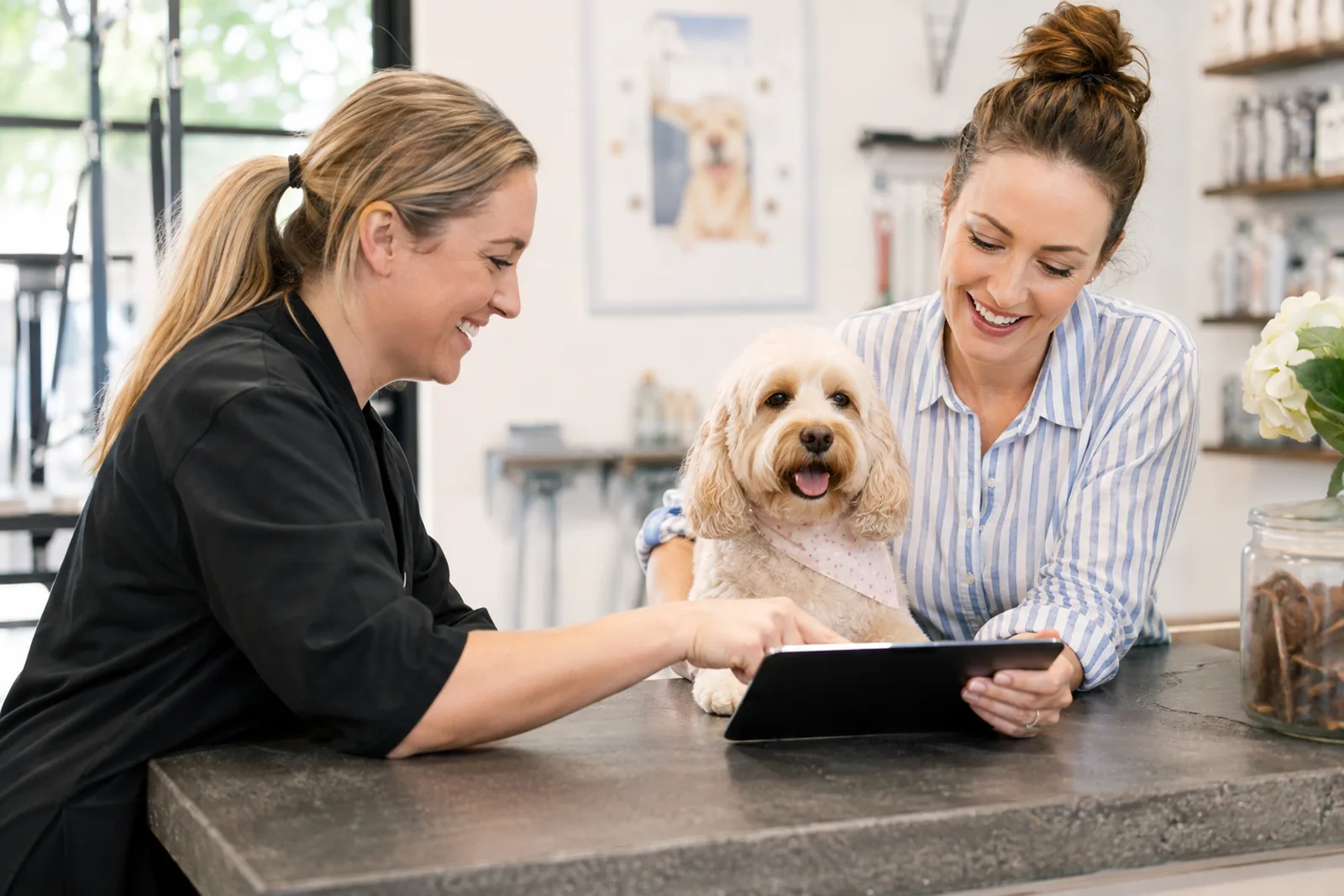
Quick answer: There is no single grooming interval for every dog. Coat type, service, lifestyle, skin condition, home care, season, and professional judgment all affect timing. The business opportunity is not to force every client into the same cycle; it is to record the appropriate next window and make rebooking easy before the client forgets. Blismo Smart Rebooking connects completed visits, client context, future availability, and follow-up so repeat appointments do not depend entirely on a rushed checkout conversation.
Pet grooming is naturally recurring, yet many businesses operate as if every visit were a one-time transaction. The groomer completes the service, explains home care, accepts payment, and moves to the next pet. If nobody schedules the next appointment, the client leaves with good intentions but no commitment. Several weeks later, the pet parent remembers only when the preferred times are already gone.
The Right Rebooking Cycle Is Individual
Searchers often ask, “How often should dogs be groomed?” The responsible answer is that the interval varies. A short-coated dog receiving a basic bath has different needs from a continuously growing coat, a double coat during shedding season, or a pet following a veterinarian-directed skin-care plan. Nail care, deshedding, trimming, full grooming, and specialty services can also follow different schedules.
A grooming business should therefore treat the timing ranges below as conversation examples, not universal prescriptions. The groomer’s recommendation and appropriate veterinary guidance should control the actual plan.
| Service situation | Possible follow-up pattern | What the business should confirm |
|---|---|---|
| Routine bath or short coat | Often a wider interval | Lifestyle, shedding, skin needs, and owner preference |
| Continuously growing coat | Often a more regular cycle | Style length, brushing, matting risk, and coat condition |
| Deshedding service | May vary by season | Breed, coat cycle, environment, and current shedding |
| Nail service | May occur between full grooms | Wear, mobility, health, and professional assessment |
| Skin or medical concern | Only under appropriate guidance | Veterinary instructions and scope of grooming practice |
Why Clients Leave Without Rebooking
The client may be satisfied and still leave without another appointment. Pickup is busy. The pet is excited. Staff is checking out another customer. The owner does not have a calendar open. The recommended date feels far away. These are workflow problems, not necessarily loyalty problems.
Manual follow-up also becomes inconsistent. One groomer asks every client. Another remembers only when the day is quiet. A spreadsheet reminder becomes outdated. A mass text reaches clients too early, too late, or when no suitable appointment is available.
Competitor content increasingly emphasizes recurring reservations, automated reminders, waitlists, and abandoned-booking recovery. This reflects a larger shift: grooming businesses are learning that retention requires a system, not just excellent service.
Rebooking Is Different From an Appointment Reminder
An appointment reminder protects an appointment that already exists. Rebooking creates the next appointment. Businesses sometimes invest heavily in reminders while ignoring the larger group of satisfied clients who have no future booking at all.
| Workflow | Purpose | Typical trigger |
|---|---|---|
| Confirmation | Verify a newly created appointment | Immediately after booking |
| Appointment reminder | Reduce forgetting and prompt confirmation | Before an existing appointment |
| Rebooking prompt | Create the client’s next appointment | After a completed visit or near the recommended return window |
| Waitlist offer | Fill a newly available time | After a cancellation or schedule opening |
| Win-back campaign | Reconnect with an overdue or inactive client | After the expected cycle has passed |
How Blismo Smart Rebooking Helps
Blismo AI Rebooking 2.0 is designed to make repeat appointments part of the operating system. It works alongside appointment history, client information, services, staff calendars, and communication instead of relying on a separate marketing list.
The process begins with context. The business knows that a visit was completed, what service was booked, whether a future appointment exists, and where there is availability. That makes it possible to focus follow-up on clients who actually need another booking.
Next comes timing. The shop chooses a suitable follow-up approach rather than treating every pet the same. The message should invite the pet parent to book around the groomer’s recommendation and available calendar, not present a generic interval as medical advice.
Finally, the client needs an easy next action. A reminder that says “it may be time” but sends the client into a long search creates friction. Blismo connects communication and booking so the path from prompt to available appointment can be shorter.
A Better Rebooking Workflow
Recommend the next window during the visit. The professional sets expectations based on the pet and service.
Offer immediate rebooking at checkout. This is still the strongest moment because the value of the service is fresh.
Record whether a future appointment exists. Do not send duplicate prompts to someone already booked.
Follow up at the appropriate time. Use service and visit context rather than one universal campaign.
Show a simple route back to the calendar. Reduce unnecessary steps between interest and booking.
Use real availability. A rebooking campaign should help fill the schedule, not create requests for times that cannot be served.
Review performance. Track completed visits, future appointments, rebooked clients, overdue clients, and response timing.
How Rebooking Improves More Than Retention
A predictable future schedule helps staffing, inventory, revenue planning, and client experience. Regular clients are easier to serve because the business already understands their history and expectations. Pet parents gain access to preferred times before the calendar fills. The groomer can recommend maintenance before the service becomes more difficult.
Rebooking also reduces dependence on constant new-client advertising. Acquisition remains important, but a business that loses established customers after every visit has to keep paying to replace demand it already earned.
How to Measure Rebooking
Start with a simple metric: the percentage of completed appointments that have another future appointment within the business’s chosen measurement window. Segment by service and groomer rather than forcing one target across the entire shop. Also measure time to next booking, response rate to follow-up, cancellation rate, and the percentage of clients who become overdue.
Do not judge success only by messages sent. The meaningful outcome is suitable future appointments. Too many prompts, poor timing, or irrelevant recommendations can damage trust even if the campaign looks active.
Segment Follow-Up Instead of Blasting Every Client
A useful rebooking system separates clients by situation. One group completed a visit and already has a future appointment; they need confirmation, not another sales message. A second group is approaching the return window recommended by the groomer. A third group is overdue and may need a gentler win-back message. A fourth group recently canceled and needs a convenient route to reschedule.
Segmentation prevents contradictory communication and improves the client experience. It also lets the business compare which timing and message produce suitable bookings. Blismo’s advantage is that appointment history, future availability, communication, and rebooking live around the same operating context. The shop should still define consent, frequency limits, quiet hours, and a simple opt-out process before activating any campaign.
Frequently Asked Questions
How often should dogs be professionally groomed?
It depends on coat type, service, condition, lifestyle, home care, season, health, and professional guidance. Groomers should give individualized recommendations and refer medical questions to a veterinarian.
What is pet grooming rebooking?
Pet grooming rebooking is the process of scheduling or prompting the next suitable grooming visit after a completed appointment.
Is rebooking the same as recurring appointments?
Not always. A recurring appointment repeats on a defined schedule. Rebooking can also be flexible, allowing the pet parent to choose from availability around a recommended window.
How does Blismo Smart Rebooking work?
Blismo connects rebooking with appointment, client, service, communication, and calendar context. Businesses should confirm the current configuration options and message controls for their plan.
Should every client receive the same reminder?
No. Different services and pets need different timing. The business should avoid universal recommendations and prevent messages to clients who already have a future appointment.
Can rebooking fill slow days?
It can help when follow-up is coordinated with genuine availability. The goal is to offer appropriate times, not pressure clients into unnecessary services.
Does AI replace the groomer’s recommendation?
No. AI can help organize and deliver follow-up. The groomer remains responsible for the professional recommendation, and veterinarians remain responsible for medical guidance.
Turn a Great Visit Into the Next Appointment
A full calendar should not depend on every staff member remembering the same checkout script. Blismo Smart Rebooking helps turn completed visits and future availability into a repeatable follow-up system while leaving service timing and professional judgment with the grooming team.