
About Alice
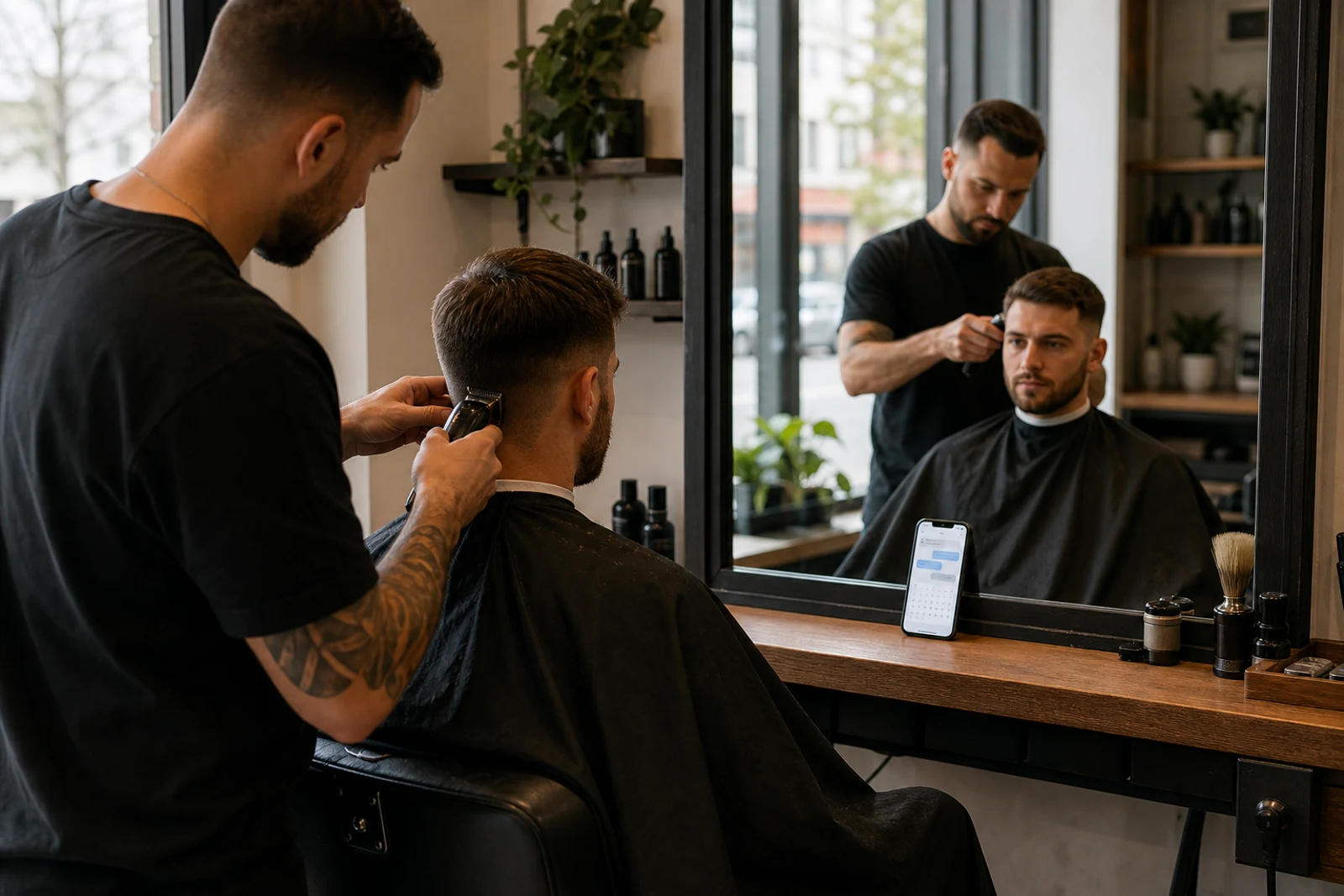
Alice is Blismo's AI customer service assistant for barbershops and salons. She handles incoming client messages on the shop's line 24/7 — answering questions, checking live availability, and booking, rescheduling, or cancelling appointments inside the conversation. Reschedules are the case she's most useful for, because they're the request most likely to fail when nobody's free to pick up.
Why Reschedules Are Worse Than New Bookings
A new booking has one moving part: find a slot, take it. A reschedule has three:
- Find the existing appointment — which requires the right name, the right day, the right barber.
- Release that slot so somebody else can take it.
- Find and confirm a new one the client can actually make.
Miss step two and the slot sits empty even though the client told you they weren't coming. That's the specific failure mode that makes reschedules expensive: an unhandled reschedule doesn't just cost you the client's time, it costs you a slot you could have refilled.
The Numbers Behind the Problem
| Metric | Figure | Source |
|---|---|---|
| Hair salon cancellation rate | 16.96% | Phorest, 2026 |
| Lash & brow cancellation rate | 21.52% | Phorest, 2026 |
| Spa cancellations made same-day | 27% | Phorest, 2026 |
| Spa cancellations made two days ahead | 37% | Phorest, 2026 |
| Average time to reschedule by phone | 8.1 minutes | BookingBee, 2026 |
| Reschedule calls transferred or bounced | 63% | BookingBee, 2026 |
| Clients who prefer phone or text over an app | 77% | BookingBee, 2026 |
| Calls barbershops and salons miss | 22–27% | BookingBee, 2026 |
Run those together for a shop doing 400 appointments a month. At roughly 17%, that's about 68 cancellation or change requests a month. At 8.1 minutes each, handling them by phone is around 9 hours of staff time monthly — before counting the ones that never get through.
What Phone Tag Actually Looks Like
The failure sequence is depressingly consistent:
- 11:40am — Client calls to move Thursday. Everyone's with a client. Rings out.
- 11:42am — Client leaves a voicemail, or doesn't.
- 2:15pm — Someone checks voicemail between clients, calls back. Client is at work. No answer.
- 5:50pm — Client calls again. Shop is closing; the person who has the calendar open has already left.
- Thursday — Client doesn't show. The slot goes empty, and it's now recorded as a no-show rather than a cancellation.
Nobody in that sequence did anything wrong. The system just required two busy people to be free at the same moment, five separate times.
The last line is the one that hurts. A reschedule that fails becomes a no-show — and a no-show is a slot you couldn't refill, versus a cancellation two days out that you could have.
Why the Timing Data Matters
Look again at the spa figures: 37% of cancellations come two days ahead, 27% come same-day (Phorest, 2026).
Two days is enough notice to refill a slot. Same-day usually isn't. So the commercial question isn't only "how many people cancel" — it's how much notice you actually capture, and that depends entirely on how easy you make it to tell you.
A client who has to call during business hours, get through, and wait on hold will often just... not. They decide on Tuesday evening that Thursday won't work, and the shop finds out on Thursday. The notice existed; the channel to deliver it didn't.
Making reschedules effortless doesn't cause more cancellations. It converts silent no-shows into early notice you can act on.
Three Ways Shops Handle This
| Phone Callback | Self-Service Booking Link | Alice | |
|---|---|---|---|
| Client effort | Call, possibly wait, possibly retry | Find link, log in, navigate | Send a text |
| Works after closing | No | Yes | Yes |
| Works during peak hours | Rarely | Yes | Yes |
| Handles "do you have anything Thursday evening?" | Yes | No — client must browse | Yes |
| Old slot released automatically | If someone remembers | Yes | Yes |
| Staff time per reschedule | ~8.1 minutes | None | None |
| Client adoption | High — but only when they get through | Low — 77% prefer phone or text | High |
| Handles a specific-barber request | Yes | Sometimes | Yes |
The middle column is the standard advice, and it's genuinely better than nothing. Its weakness is adoption: with 77% of clients preferring to call or text, a self-service link only serves the minority who were already comfortable self-serving.
Alice's advantage isn't that it's more capable than a booking page. It's that it meets clients on the channel they already chose.
What Alice Does With a Reschedule Request
- Reads the request in plain language — "can I move my Thursday to next week?" doesn't need a format.
- Finds the existing appointment from the client's record.
- Checks live availability, including the specific barber if one was requested.
- Offers real times rather than promising to call back.
- Moves the appointment and releases the old slot so it can be refilled.
- Confirms by text, with the new time in writing.
- Escalates anything unusual — a dispute, a complaint, a request that doesn't fit — to a person.
Steps 2 and 5 are the ones that separate this from a general-purpose chatbot. Finding the right existing appointment and freeing the vacated slot are what make it a real reschedule rather than a new booking sitting on top of a stale one.
How This Changes the Economics
Take the same 400-appointment shop:
- ~68 change requests a month at a 17% cancellation rate.
- ~9 hours of staff time if handled by phone at 8.1 minutes each.
- Some share of those requests never get through at all — with 22–27% of calls missed, a meaningful number become silent no-shows.
Two things change when reschedules resolve instantly in a text thread. First, that 9 hours goes back to the floor. Second — and worth more — the requests that used to fail now arrive as advance notice instead of an empty chair. A slot released two days out is refillable; a no-show at 2pm Thursday generally isn't.
That's the mechanism by which handling reschedules well raises revenue: it isn't about reducing cancellations, it's about converting them into rebookable notice.
What This Doesn't Solve
Worth being straight about:
- It won't stop people cancelling. Cancellation rates are driven by life, not by your booking system. What changes is how much warning you get.
- It doesn't replace a cancellation policy. If chronic last-minute cancellations are your problem, deposits and policy are the lever — automation just makes the policy easier to apply consistently.
- It doesn't help if your calendar is wrong. Any assistant works from the availability it's given.
Frequently Asked Questions
How long does it take to reschedule an appointment by phone?
An average of 8.1 minutes, with 63% of those calls transferred or bounced before resolution — which is why a handful of reschedules a week consumes real staff hours.
What's a normal cancellation rate for a salon?
Around 16.96% for hair salons and 21.52% for lash and brow services, according to Phorest's 2026 analysis.
Why do reschedules turn into no-shows?
Because the client tried to tell you and couldn't get through. If the only channel is a phone call during business hours, some share of intended reschedules simply never lands — and shows up as an empty chair instead.
Won't making it easier to cancel increase cancellations?
The evidence points the other way on what matters: the cancellations were happening regardless. Easier notice converts same-day surprises into two-day warnings you can refill.
Why not just send everyone a self-service booking link?
Some clients will use it. But 77% prefer phone or text for appointment changes, so a link alone leaves most of the volume on the channel you were trying to avoid.
Can Alice move an appointment to a specific barber?
Yes — she checks that barber's live availability rather than treating all slots as interchangeable.
Does the old slot get released automatically?
Yes. That's the step most likely to be forgotten in a manual process, and it's the one that determines whether the slot can be refilled.
What happens with a complaint or an unusual request?
It escalates to a person. Automated replies are the wrong tool for anything sensitive.