
About Blismo Smart Rebooking
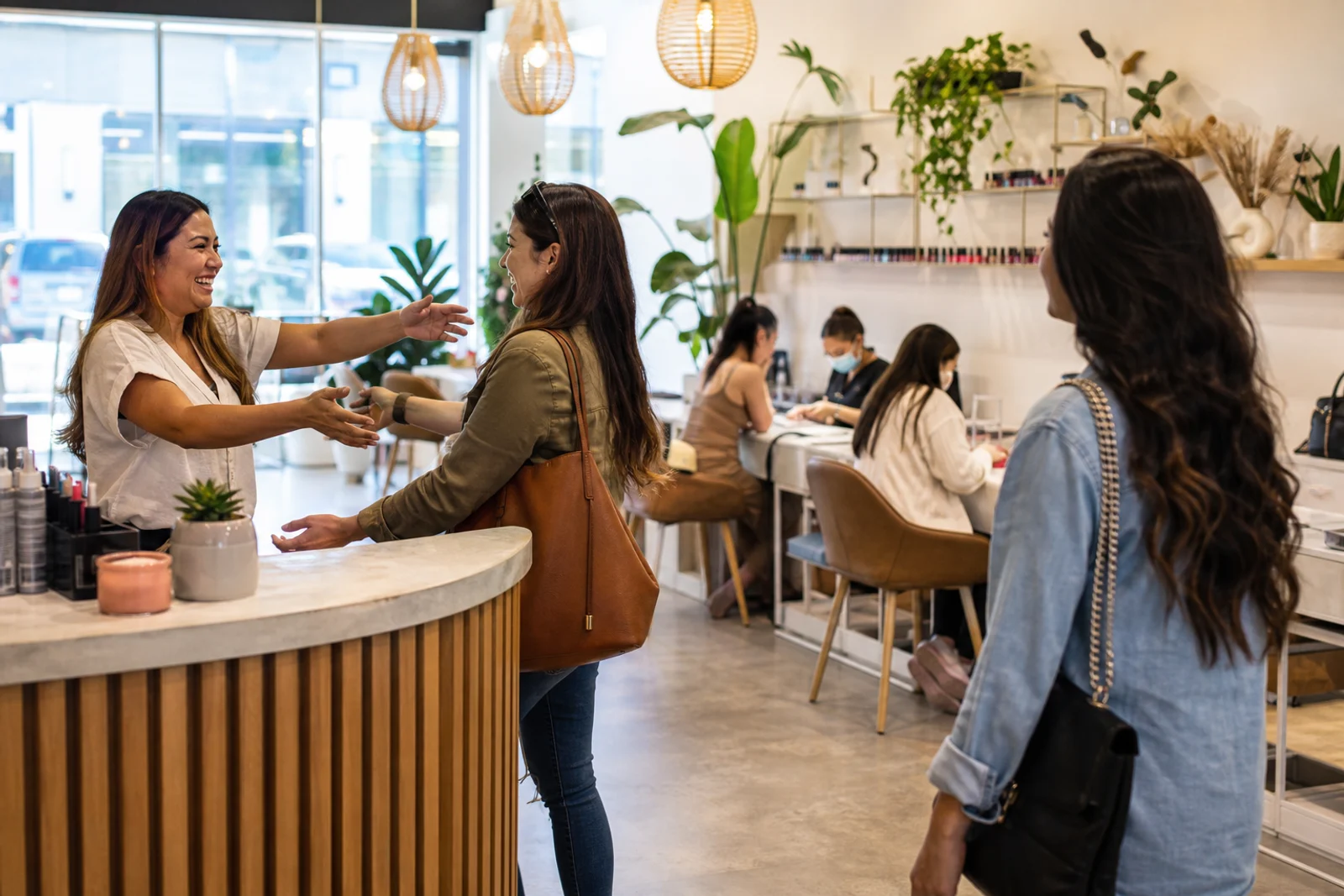
Blismo Smart Rebooking is the part of Blismo that works on the clients you already have — making sure the next appointment gets booked rather than left to chance, following up when it doesn't, and reaching clients who've quietly stopped coming. It doesn't generate new leads. It stops you needing as many.
First, an Honest Look at What New Clients Cost
Every channel has a real number attached. Here's what a nail salon is actually choosing between:
| Channel | What It Costs | What You Get |
|---|---|---|
| Google Search ads | ~$5.26/click, ~$70.11/lead | High intent — they're searching for you right now |
| Google Local Services Ads | Pay-per-lead, appears above map results | |
| Meta (FB/IG) ads | $20–$35/lead in beauty | Lower intent, strong visually |
| Google Business Profile | Free | Where most "nail salon near me" decisions happen |
| Referrals | Free | 74% first-year retention vs 41% for ad-acquired clients |
| Walk-ins | Free | 40–60% of a nail salon's daily traffic |
| Rebooking existing clients | Near zero | 5–7× cheaper than acquiring |
Look at the last four rows. The four cheapest channels are also the four most nail salons under-use.
What Stopped Working
Deep discounting to buy first visits. The maths never really worked and it works less now. A discounted first visit at a $70–$120 ticket only pays back if the client returns at full price — and discount-acquired clients are the least likely to. Referral-acquired clients retain at 74% in year one; ad-acquired clients at 41% (Favecard, 2026). Discount-acquired sits below that.
Posting without a plan. Instagram still matters — nail work is among the most visual content in any service industry — but volume alone stopped being enough years ago.
Relying on foot traffic. Walk-in demand is real, but a salon that only converts walk-ins into that day's revenue and never into a client record is starting from zero every morning.
What Still Works
Google Business Profile. Free, and it's where the "nail salon near me" decision is usually made and closed — photos, hours, reviews, booking link, all before anyone reaches a website.
Referrals. Around 65% of new nail salon business comes from referrals, and those clients spend 25% more per visit (Mangomint, 2026; Favecard, 2026). You can't buy this — but you also can't get it from clients who only came once.
Answering the phone. 60–70% of nail clients book from a phone, and 46–50% of appointments are booked outside business hours (LeadSuiteNow, 2026). Beauty businesses miss an estimated 22–27% of calls (BookingBee, 2026) — that's paid-for demand ringing out.
Memberships and loyalty. Clients visit 4.2 times a year without a loyalty program and 6.8 times with one (JeriCommerce, 2026). That's a 62% increase in visit frequency from the same client base.
The Number That Reframes All of It
Here's the industry benchmark most owners have never seen: the average salon rebooks 40% of clients. Top performers rebook 69% (JeriCommerce, 2026).
Twenty-nine percentage points. Work through what that's worth on a salon doing 400 appointments a month at a $106 average ticket:
At 40% rebooking: 160 appointments generate a next visit.
At 69%: 276 do.
Difference: 116 appointments a month — around $12,300 in monthly revenue, from clients who were already sitting in your chairs.
To buy 116 new appointments through Local Services Ads at $233 per paying customer would cost roughly $27,000. The rebooking route costs the effort of asking.
That's the whole argument. Not "don't advertise" — advertise if you want to grow. But fix the leak first, or you're paying $233 to replace clients you already had.
Why This Bites Harder in Nail Than in Hair
Four things make nail salons structurally different, and all four point the same way:
| Barbershop / Hair | Nail Salon | |
|---|---|---|
| Service cycle | 4–6 weeks | 2–3 weeks |
| Average ticket | ~$40 | $70–$120+ |
| Walk-in share of traffic | Low | 40–60% |
| Cost of not returning | Hair grows out | The product fails |
That last row is the one nobody writes about. If someone skips a haircut, they look shaggy. If someone skips a fill, the gel lifts, catches on things, and traps moisture underneath; acrylics grow out unbalanced and break. It stops being cosmetic and becomes a problem with the nails themselves.
Which means the client who misses week three doesn't drift back at week five. They get frustrated, take it off — often badly, at home — and the next set gets booked wherever is quickest. The window is narrower and it closes harder.
Meanwhile the 2–3 week cycle means a nail client can visit 12–20 times a year (Tilavon, 2026). At $106 a visit, one retained client is worth $1,270–$2,120 annually. Losing one isn't losing $106.
The Free Channel Sitting in Your Own Salon
Walk-ins make up 40–60% of a nail salon's daily traffic (Zenoti, 2026). That is an enormous number, and it's an acquisition channel that costs nothing — the client already walked through the door and paid.
Most salons treat that as a completed transaction. No record, no next appointment, no way to reach them again. The same person then walks into whichever salon is convenient next time.
Converting even a fraction of walk-in traffic into recorded, rebooked clients is the cheapest growth available to a nail salon — cheaper than Google, cheaper than Meta, cheaper than referral incentives, because the acquisition already happened and nobody captured it.
How Smart Rebooking Closes the Gap
The 40%-to-69% gap isn't a knowledge problem. Every nail tech knows they should book the next appointment. It fails because of when the ask has to happen.
The moment a client is most likely to rebook is the moment they're happiest — right after the set is finished. It's also the moment their hands are wet, or curing, or freshly painted, and they physically cannot get their phone out to check a calendar. So it gets left to "I'll text you," and then nobody does.
Smart Rebooking removes the dependency on that moment:
Knows each client's cycle — a fill is due at 2–3 weeks, not a generic "sometime."
Follows up at the right time, before the window closes rather than after they've gone elsewhere.
Books in the message thread, so the client doesn't need an app or a phone call.
Catches clients who've lapsed — the ones who stopped coming without ever saying anything.
Runs whether or not anyone remembered, which is the entire point.
What This Doesn't Do
Being straight, because retention gets oversold too:
It won't create new clients. If nobody knows your salon exists, rebooking has nothing to work with. You still need Google Business Profile, reviews, and a findable presence.
It won't fix a service problem. Clients who don't come back because they didn't like the work aren't a rebooking issue.
It won't help if you don't capture client details. Walk-ins who leave no record can't be rebooked.
It isn't a substitute for answering the phone. With 60–70% of nail bookings starting on a phone, an unanswered line loses clients before retention becomes relevant.
Where to Start
| If your situation is... | Start with |
|---|---|
| Busy but revenue is flat | Rebooking — you have the clients, not the return rate |
| Lots of walk-ins, few regulars | Capturing walk-in details, then rebooking |
| Phone rings out during peak hours | Phone answering first — you're losing demand you already generated |
| New salon, nobody knows you | Google Business Profile and reviews before anything paid |
| Good retention, want more volume | Now paid channels make sense |
The order matters more than the tactics. Buying traffic into a salon that rebooks at 40% means paying $233 a head to refill a bucket with a hole in it.
Frequently Asked Questions
How much does it cost to get a new nail salon client?
Through Google Local Services Ads, about $233 per paying customer. Through Search ads, roughly $70 per lead before conversion. Through referrals or rebooking, close to nothing.
What's a good rebooking rate for a nail salon?
The industry average is around 40%. Top performers reach 69%. If you're near the average, that gap is the largest revenue opportunity in your business.
Is it cheaper to keep clients or find new ones?
Keeping them — 5–7× cheaper. And 42% of returning clients generate 80% of salon revenue.
How often should a nail client come back?
Every 2–3 weeks for fills, which means a retained client can visit 12–20 times a year — worth $1,270–$2,120 annually at a $106 average ticket.
Do discounts bring in good clients?
Rarely. Ad-acquired clients retain at 41% in year one against 74% for referrals, and discount-acquired clients sit lower still.
What's the most overlooked source of nail salon clients?
Walk-ins. They're 40–60% of daily traffic, they've already paid, and most salons never record them or book them again.
Should I advertise or work on retention first?
Retention, unless nobody knows you exist. Advertising into a 40% rebooking rate means repeatedly buying back clients you already had.
Does Smart Rebooking bring in new clients?
No — it works on existing ones. Its value is reducing how many new clients you need to buy each month to stay level.