
About Alice
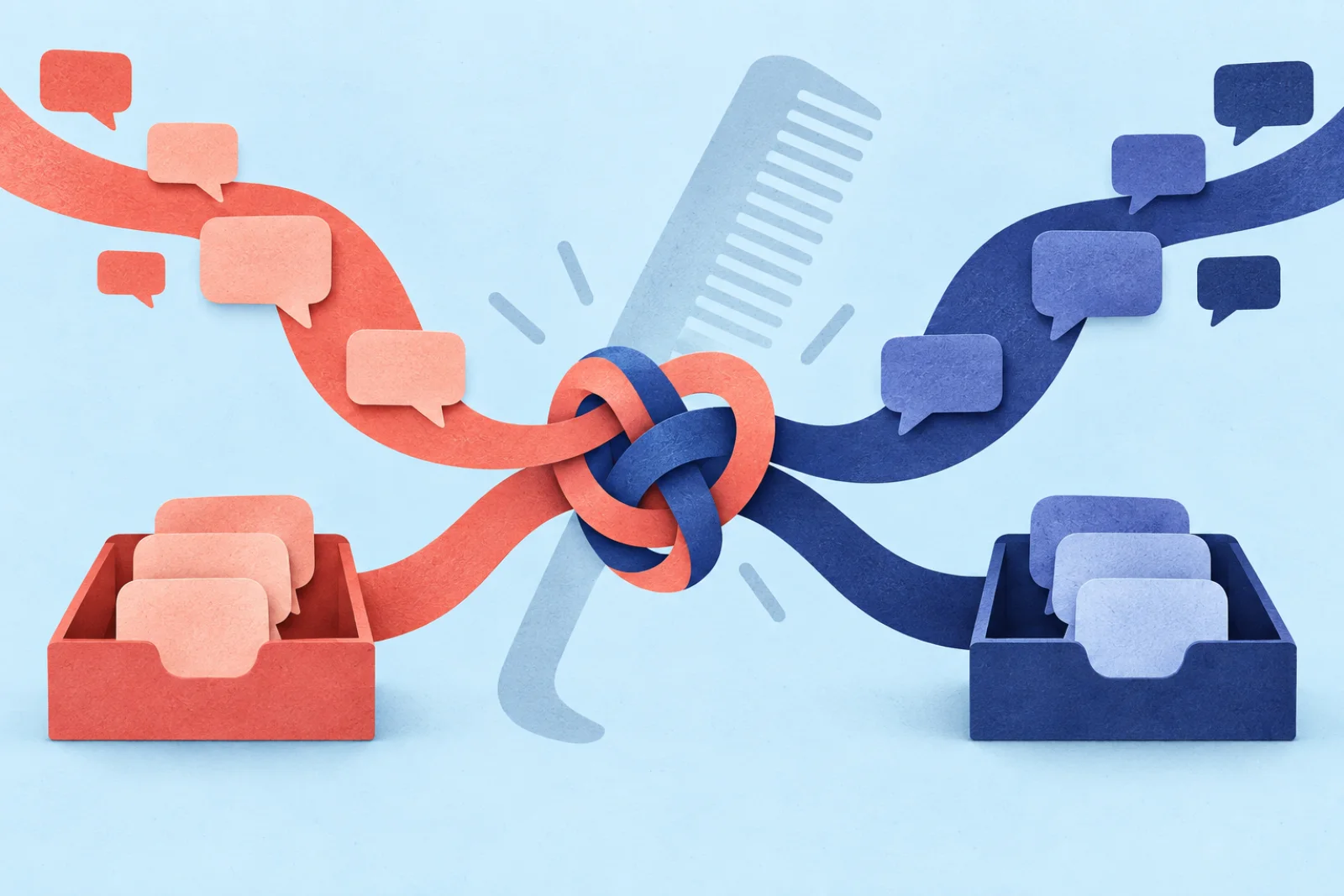
Alice is Blismo's AI customer service assistant for barbershops and salons. She handles incoming client messages on the shop's line — answering questions, checking live availability, and booking or rescheduling appointments — around the clock. For a shop trying to get client conversations off staff members' personal phones, she solves the objection that usually blocks it: that a business line means slower replies.
How It Starts, and Why It's Hard to Undo
Nobody decides to run their business from a personal phone. It happens gradually:
- A regular asks for your number so they can check you're in on Saturday.
- You give it, because saying no is awkward and it's genuinely easier.
- They text a friend your number as a recommendation.
- Eighteen months later, a meaningful share of your bookings arrive on a phone that also has your family group chat on it.
By that point, unwinding it feels like it would cost you clients — which is why most barbers don't, even when it's obviously unsustainable.
What It Actually Costs the Shop
| Problem | What It Looks Like Day to Day |
|---|---|
| No coverage | If that barber is off, sick, or has left, those messages reach nobody — the client assumes the shop ignored them |
| No visibility | The shop has no record of what was promised, quoted, or booked |
| No boundaries | Messages arrive at 11pm and on days off; there's no "closed" state on a personal phone |
| Client relationships aren't the shop's | When a barber leaves, the conversation history and the direct line go with them |
| Double-booking risk | A slot promised by text isn't in the calendar until someone enters it |
| Nothing is auditable | Disputes about what was agreed come down to one person's phone |
The fourth row is the one that matters most commercially. If a barber's client list lives in their personal messages, it isn't the shop's client list — it's theirs, and it walks out with them.
The Privacy Side Is Real Too
This isn't only a business-continuity issue. It's a working-conditions one.
A personal number has no off switch. There's no "the shop is closed" state, no way to stop a client messaging during dinner, and no way to separate a booking request from a message from your mother. Staff often tolerate this for years because refusing feels unprofessional — and it's a genuine contributor to burnout in an industry where the same person is often the technician, the receptionist, and the owner.
Notably, salon software vendors now market privacy protection as a feature of two-way texting — for example, DaySmart positions its texting as letting you "manage every client conversation directly within the software to protect your privacy" (DaySmart, 2026). That's a reasonable signal that the problem is widespread enough to sell against.
Why "Just Tell Clients to Use the Booking Link" Doesn't Work
The obvious answer is to redirect everyone to online booking. In practice it fails for a predictable reason: clients text because it's easier, and the alternative you're offering is harder.
Research on appointment changes finds around 77% of clients prefer calling or texting over navigating an app (BookingBee, 2026). Telling someone who wants to move an appointment to go download something and log in is asking them to do more work than sending you five words.
The realistic goal isn't to stop clients texting. It's to change which number they text — and to make sure that number answers as fast as you did.
Personal Number vs. Business Line vs. Business Line + AI
| Personal Mobile | Business Line (Staffed) | Business Line + Alice | |
|---|---|---|---|
| Reply speed | Fast — but only when that person is free | Depends on who's watching | Immediate, any hour |
| Works when the barber is off | No | Yes | Yes |
| Shop has visibility of conversations | No | Yes | Yes |
| Client list belongs to the shop | No | Yes | Yes |
| Bookings land in the calendar | Only if manually entered | Usually | Automatically |
| Staff can switch off | No | Yes | Yes |
| Survives a staff departure | No | Yes | Yes |
How to Actually Make the Switch
The transition is the hard part. A few things that make it work:
- Set up the business line before you announce anything. Nothing erodes trust like redirecting people to a channel that isn't answering yet.
- Make sure the new line replies faster than you did. This is the whole argument for automation here — if the business line is slower, clients will drift back to the personal one.
- Tell clients once, warmly, and give a reason they benefit from. "Text this number instead — it's monitored even when I'm with a client, so you'll get a faster answer."
- Auto-reply on the personal number for a few months, pointing to the new one, rather than going silent.
- Don't enforce it aggressively. Long-standing regulars will take time. The goal is that new clients never end up on the personal number in the first place.
Handling the Staff Conversation
The switch is rarely blocked by technology. It's blocked by a barber who quietly believes the shop is trying to take their clients — and depending on how your chairs are structured, that concern may be reasonable.
Two things help:
- Say what the line is for. Coverage and continuity, not surveillance. A barber who is off on Tuesday shouldn't be the reason a client goes unanswered.
- Deal with the commercial question directly. If barbers rent chairs or expect to keep a personal following, phone policy is the wrong place to settle it. Set the commercial terms explicitly, then the shop line stops being a proxy fight.
For booth renters in particular, a personal number may genuinely be appropriate — they're running their own business. The argument in this article applies squarely to employed staff whose client relationships belong to the shop.
What Alice Changes About This
The reason most barbers never move off their personal number is that they believe responsiveness is the thing clients value — and they're right. A business line that takes six hours to reply is worse for the client than a personal one that replies in ten minutes.
Alice removes that trade-off. The business line answers immediately, at any hour, and completes the booking rather than promising to check. Clients get a faster experience than they had on the personal number, and the shop gets visibility, continuity, and the ability for staff to switch off at the end of a shift.
Frequently Asked Questions
Should clients have my personal phone number?
It works until it doesn't. The problems — no coverage when you're off, no shop visibility, no boundaries, and losing the client relationship if you leave — all arrive later, which is why it feels harmless early on.
Won't I lose clients if I stop replying on my personal number?
Not if the alternative replies faster. Clients text for convenience, not for the specific number — the risk comes from moving them to a slower channel, not a different one.
Why not just point everyone to online booking?
Because around 77% of clients prefer calling or texting over using an app for appointment changes. Redirecting them to more work is what drives them back to your personal phone.
What happens to client messages when a barber leaves?
On a personal number, they leave with them — along with the conversation history and the direct relationship. On a shop line, they stay with the shop.
How do I move existing clients across?
Set up the new line first, tell clients once with a benefit-led reason, and leave an auto-reply on the old number pointing to the new one for a few months.
Does Alice work on a dedicated business number?
Confirm the specifics at blismo.com — including whether Blismo provides a number or connects to one you already have.
Is this really a problem, or just a preference?
Both. The privacy and burnout side is a preference many staff feel strongly about; the continuity side — losing client relationships when someone leaves — is a straightforward business risk.
What about staff who want to keep their own client relationships?
That's worth addressing directly rather than through phone policy. If barbers feel the shop line threatens their personal following, the underlying issue is commercial, not technical.